Health Justice Learning Hub
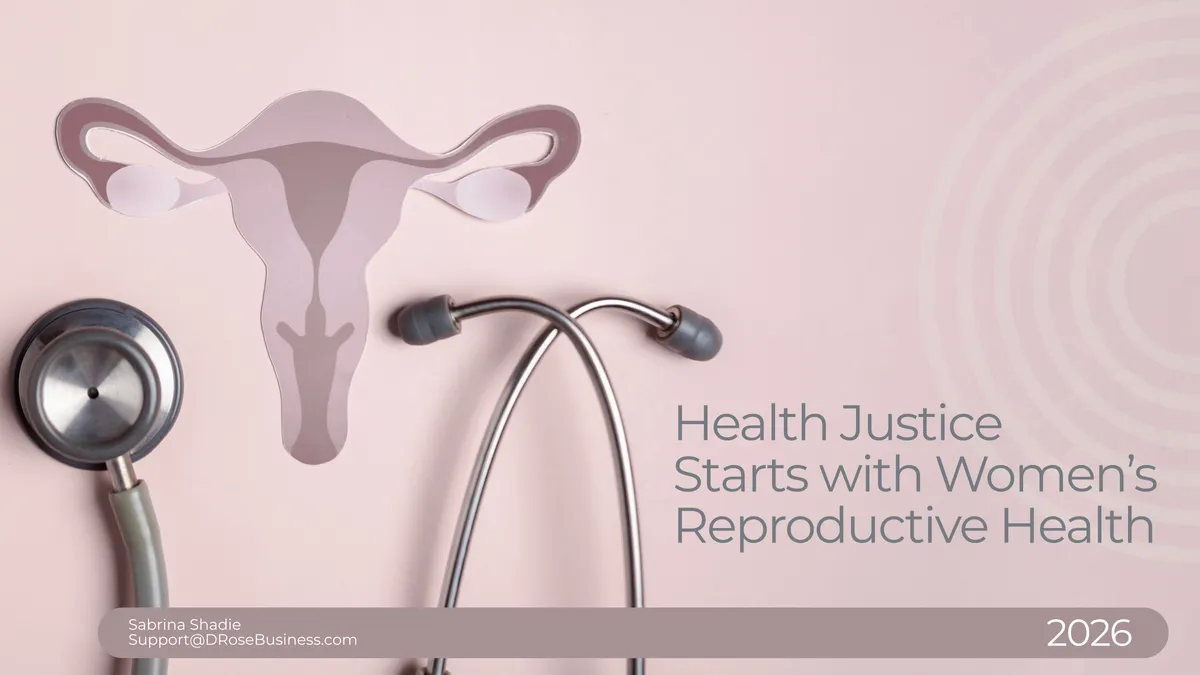
Health Justice Starts with Women’s Reproductive Health
Reflective Learning Hub
Welcome to the companion learning hub for Health Justice
This learning hub combines lived experience, research, policy analysis and social justice perspectives to explore one critical question:
What does women's reproductive health reveal about the strengths, failures and future of our healthcare systems?
Drawing on my personal health journey alongside national and international evidence, resources shared on this page examine women's health inequalities, reproductive justice, health system sustainability and the broader social determinants that influence diagnosis, treatment, recovery and long‑term wellbeing.
Although the primary content and experience is centred on the UK, the NHS and regional research, I have also included global data and information to highlight that this is a wider issue which impacts communities around the world.
Women's Reproductive Health:
A Foundation for Equity, Communities and Sustainable Societies
Women's health, and particularly reproductive health, is far more than an individual medical issue. It sits at the intersection of human rights, social justice, economic participation and community wellbeing. The ability to access timely, appropriate and equitable reproductive healthcare influences education, employment, family life, financial security and long‑term quality of life.
Healthy women help create healthy families and thriving communities. Women's reproductive health affects fertility, pregnancy, childbirth, menopause and broader physical and mental wellbeing across the life course. When individuals are unable to access appropriate care, the impacts are often felt beyond the person concerned, affecting partners, children, caring responsibilities, household income and community resilience.
From an equity perspective, reproductive health highlights how power, representation and access shape health outcomes. Significant disparities continue to exist globally in relation to diagnosis, treatment, maternal health, reproductive rights and healthcare access, particularly for individuals experiencing poverty, discrimination, disability, geographic isolation or other forms of marginalisation.
These inequalities demonstrate that healthcare is not simply about medicine, but about fairness, inclusion and social justice.
The societal and economic consequences are equally significant. Women's health conditions and reproductive health challenges contribute to workforce absence, reduced productivity, loss of earnings, increased pressure on health and social care systems and wider economic costs. Delayed diagnosis, inadequate treatment pathways and insufficient workplace support can prevent individuals from fully participating in education, employment and public life.
Conversely, investment in women's health generates benefits across society through improved workforce participation, stronger family stability, reduced healthcare costs and better long‑term population health outcomes.
Ultimately, women's reproductive health is a cornerstone of sustainable development. Healthcare systems, employers, governments and communities all have a role in ensuring that women have access to safe, effective and equitable healthcare throughout their lives. When women's health is prioritised, the benefits extend far beyond individuals, creating healthier families, stronger economies, more resilient communities and fairer societies for everyone.
Watch the Full Presentation
The full recording explores:
~ Women's health as a social justice issue
~ The impact of delayed diagnosis and treatment
~ Endometriosis and reproductive healthcare inequalities
~ Surgical menopause and long‑term recovery
~ Reproductive justice as a global framework
~ Women's health inequalities in the UK and internationally
~ Climate justice and women's health
~ Sustainable healthcare systems
~ Leadership, organisational and community actions
The session also includes reflective activities and practical actions designed to help participants apply the learning within their own professional, community and policy contexts.
Research, Evidence and Reference Materials
Quality social impact work must be grounded in evidence.
To support continued learning, we have compiled a comprehensive guide containing the research, reports, policy papers, journals, health strategies and authoritative sources used throughout the presentation and supplementary resources shared.
Topics covered include:
~ Endometriosis research
~ Women's Health Strategy for England
~ Menopause and surgical menopause
~ Reproductive justice frameworks
~ Global women's health inequalities
~ Health equity and social determinants of health
~ Human rights and healthcare access
~ Climate justice and health
~ Sustainable healthcare systems
This resource has been designed to support health professionals, social impact practitioners, community leaders and policy makers who wish to explore these topics in greater depth.
Buy this resource for £29.
The DRose Insights Health Journey Series
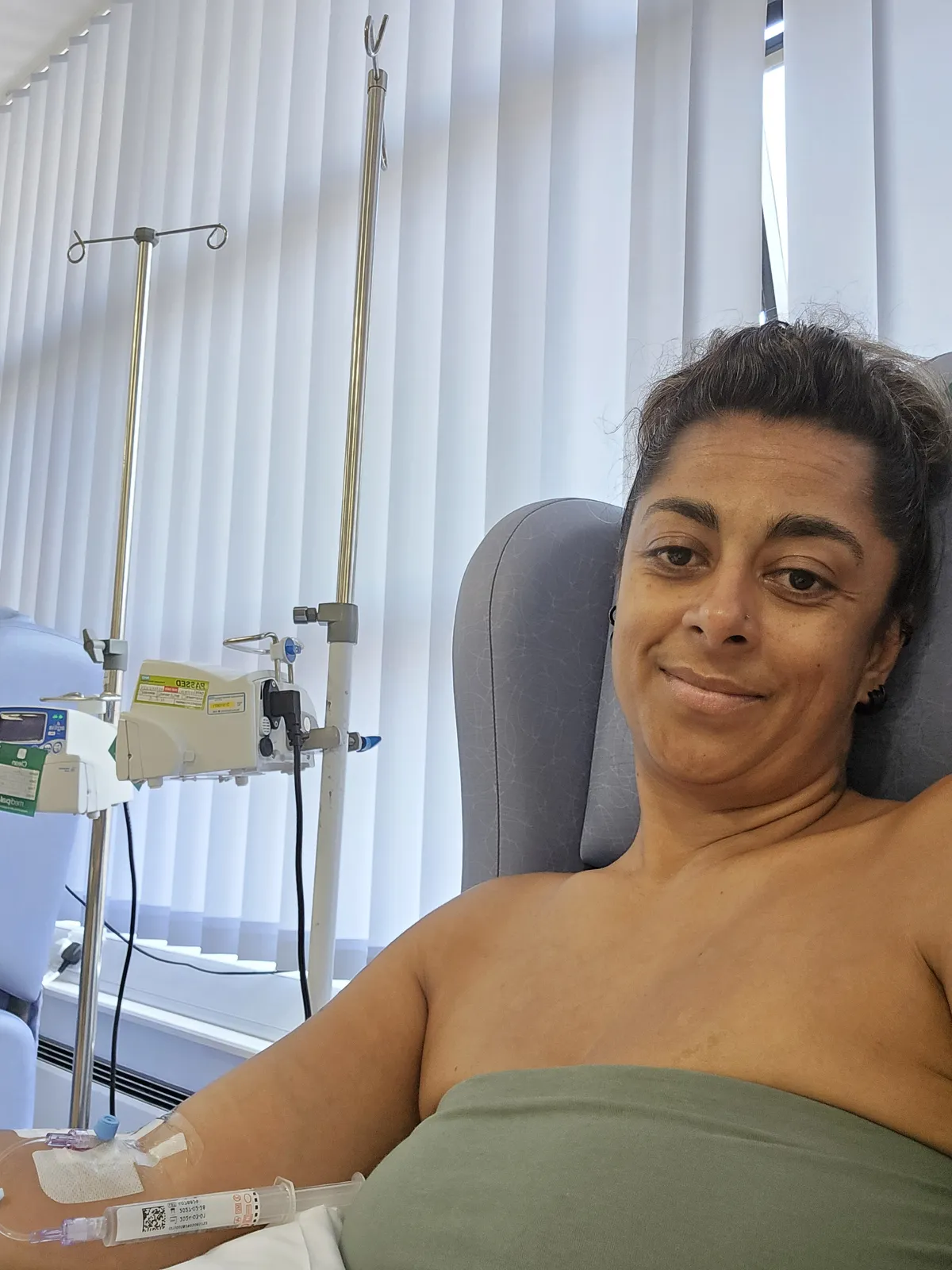
The presentation draws on reflections shared through the DRose Insights Health Journey series, a collection of articles documenting the realities of living with endometriosis, accessing treatment, navigating major surgery, adapting to surgical menopause and rebuilding life and work during recovery.
While rooted in lived experience, these articles go beyond personal storytelling to explore wider questions of women's health inequality, healthcare access, wellbeing, systems change and reproductive justice.
Key Learning Reflection
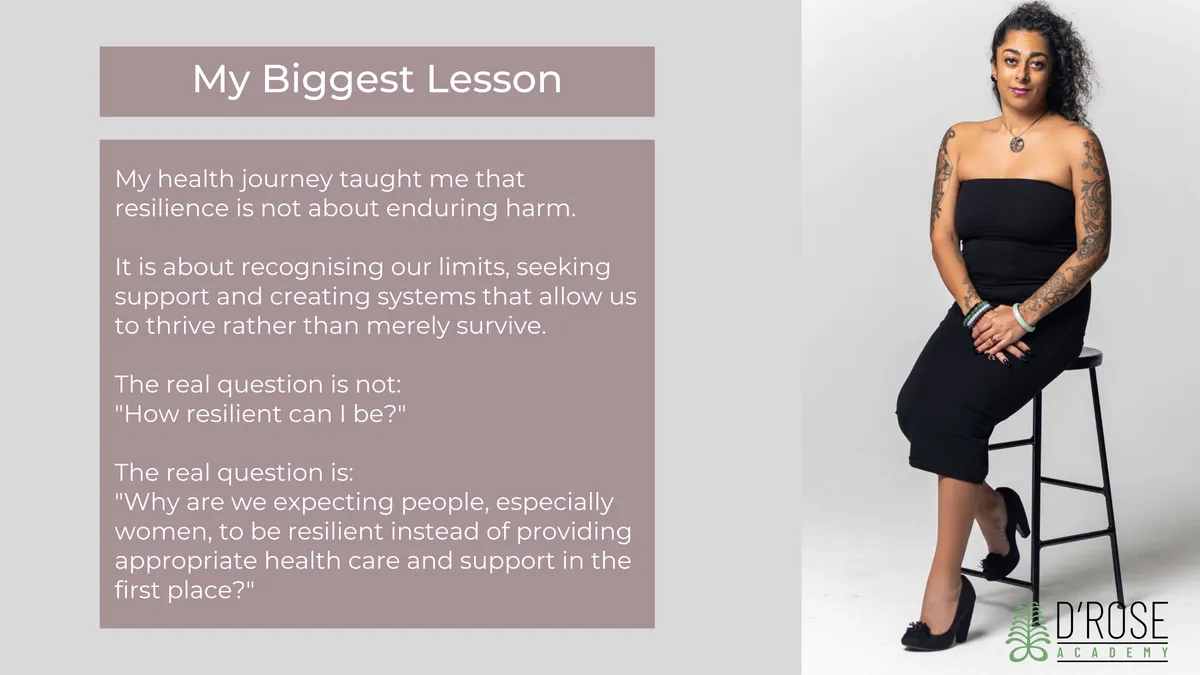
The real question is not 'How resilient can I be?'
The real question is 'Why are we expecting people, especially women, to be resilient instead of providing appropriate healthcare and support in the first place?'
Women's Health: The Cost of Being Unheard
Women's health is often discussed as a healthcare issue, but it is equally an issue of equity, access and ethical practice. In this article from September 2026, i briefly explore the learning from new research which is confirming women's experiences of inequalities in health care services and outcomes.
The opening article introduces the wider context of the journey and explains why women's health cannot be separated from conversations about social justice, healthcare accessibility and equity. It reflects on years of symptoms, treatment pathways and the long-term impact of living with an undiagnosed and progressive reproductive health condition.
This article provides an update following extensive surgery and explores the physical realities of recovery, the challenges of navigating healthcare systems and the often-overlooked impacts of major reproductive health interventions. It highlights the importance of informed decision-making, appropriate support and realistic expectations around recovery.
Recovery often requires people to step away from work, routine and familiar identities. This article reflects on the emotional, practical and professional challenges of being forced to slow down, reconsider priorities and adapt to significant changes in health, energy and capacity.
Focusing on the ongoing experience of surgical menopause and life after surgery, this article explores adaptation, self-advocacy and the process of redefining wellbeing. It reflects on how resilience is often misunderstood and argues for greater awareness, support and investment in women's reproductive health across healthcare, workplaces and society.
Collectively, the Health Journey series provides additional lived experience context to the themes explored in the presentation, including:
~ Women's health inequalities
~ Reproductive justice
~ Medical dismissal and delayed diagnosis
~ Surgical menopause and recovery
~ Workplace impacts of health conditions
~ Health as a human rights issue
~ Sustainable and equitable healthcare systems
These articles are intended to encourage reflection, increase understanding and contribute to wider conversations about women's health, health justice and the role organisations and communities play in creating more equitable outcomes.
I feel by openly sharing my experience and journey, we can highlight the true challenges of women's reproductive health and wider health justice issues, which impact communities around the globe compounding inequalities and failing communities.
Reflective Practice Resource
Meaningful change begins with reflection.
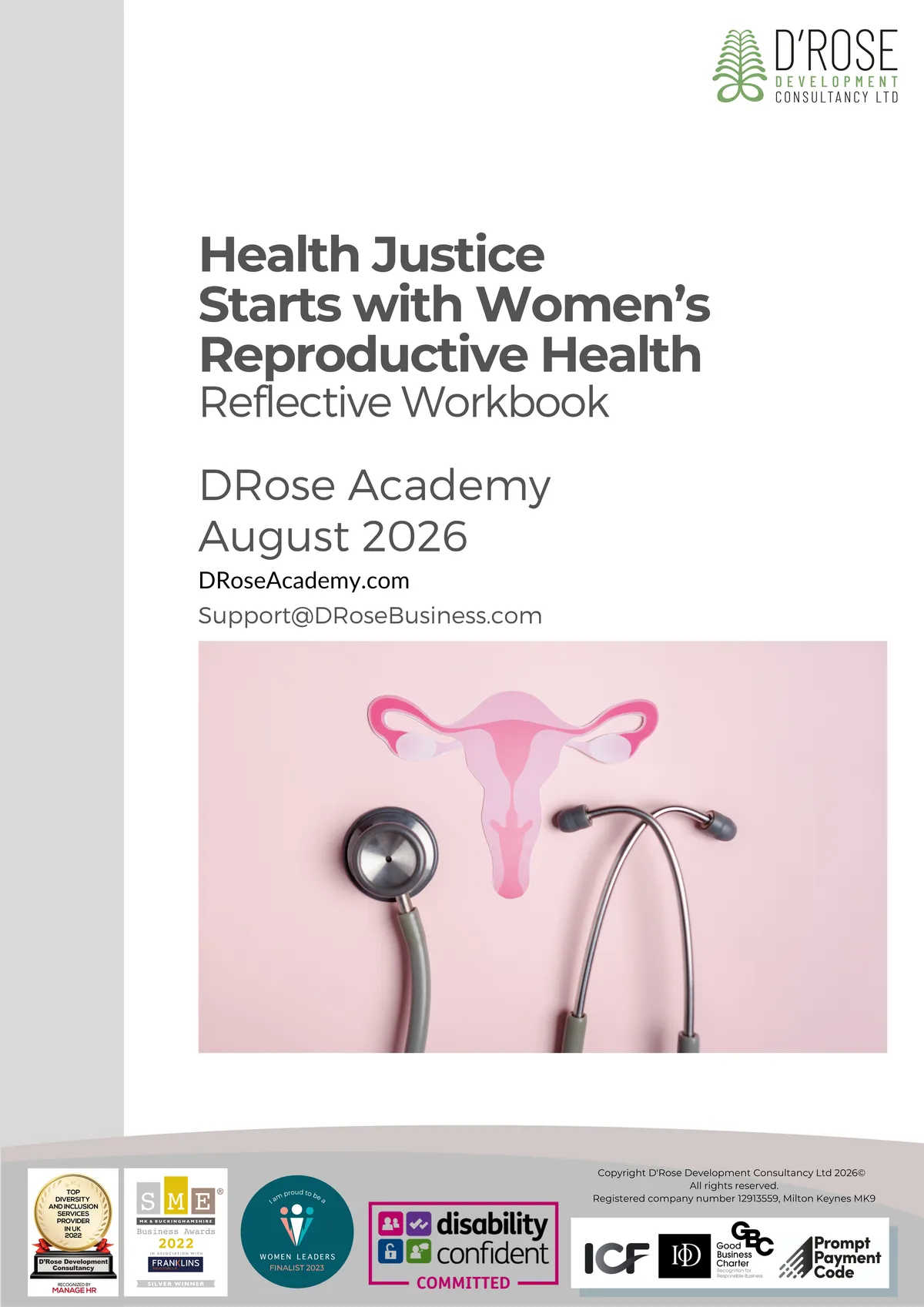
Alongside the recording and research materials, participants can access a downloadable reflective practice workbook designed to support deeper consideration of:
Personal Reflection
~ What assumptions do we hold about health, recovery and resilience?
~ How do our own experiences shape our understanding of healthcare systems?
Professional Reflection
~ How well do our organisations support women's health?
~ Where do reproductive health and wellbeing sit within our inclusion and wellbeing strategies?
Systems Reflection
~ Who has power within healthcare systems?
~ Whose voices are missing from healthcare decision‑making?
~ What barriers continue to prevent equitable access to care?
Action Planning
~ Individual actions
~ Leadership responsibilities
~ Organisational improvements
~ Community and advocacy opportunities
The workbook can be purchased for £29 to be used individually, within teams or as part of facilitated learning and development activities.
Purchasing Resources
We create quality learning resources to support our educational content. Selling these resources at accessible prices, allows us to continue our community engagement work highlighting issues of social inequalities. By purchasing this workbook for £29 you will be supporting our work in the UK and globally, delivering coaching and development services which address a range of social justice issues.
Continuing the Conversation
Health justice, reproductive justice and climate justice are deeply interconnected.
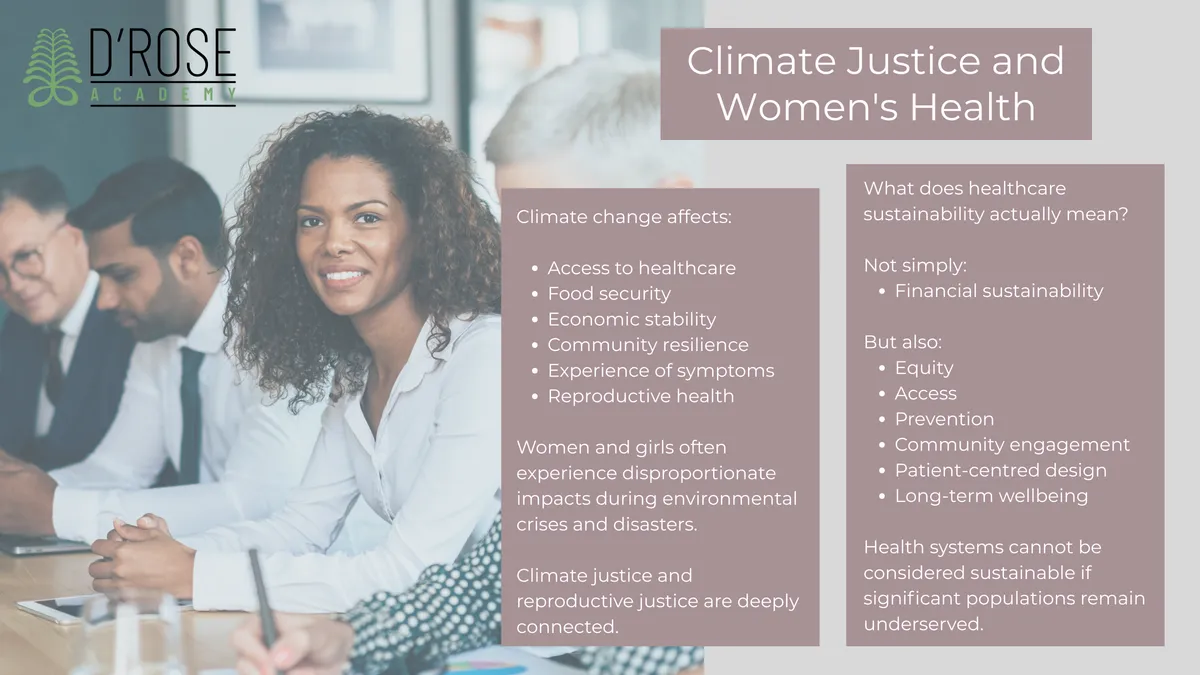
Improving women's health outcomes requires more than healthcare reform alone. It requires leadership, investment, research, community engagement and a commitment to ensuring that people's experiences are recognised within the systems designed to support them.
With DRose Academy you can continue to explore these themes through:
~ Professional learning resources
~ Social Impact Webinars
~ Ethics and Equity development programmes
~ Research-informed articles and guidance
~ Community discussions and reflective practice
We invite you to continue your learning, share your reflections and contribute to the wider conversation about creating more equitable, accessible and sustainable systems for everyone.
For learning resources, social impact content and professional development opportunities visit

About the Facilitator
Sabrina Shadie brings a wealth of both professional expertise and lived experience to this work. As a specialist educator and behavioural practitioner, she has extensive experience supporting individuals, professionals and organisations to understand behaviour, build resilience and embed ethical practice.
She is a qualified practitioner in CBT and executive coaching inclusive learning approaches, with additional expertise in strategic planning and inclusive education. Alongside her professional work, Sabrina also draws on her intersectional lived experience, giving her a deep, practical understanding of the emotional, relational and systemic realities of social impact themes. Learn more about her journey here.
This combination allows her to deliver sessions that are both grounded in evidence-based practice and rooted in real-world understanding, with a strong focus on ethical, sustainable approaches to care and self-care.
Find out more by visiting Sabrina's career profile.
Contribute to our work
DRose Academy offers free content as part of our commitment to diving quality social impact. If you have found value in the free and 'pay as you feel' content we provide, please consider making a contribution to support us in continuing with this work.
RESOURCES
COMPANY
Copyright 2026 | DRose Academy

John Smith
Developer
Highly Recommended Course. Easy to Understand, Informative, Very Well Organized. The Course is Full of Practical and Valuable for Anyone who wants to Enhance their Skills. Really Enjoyed it. Thank you!!