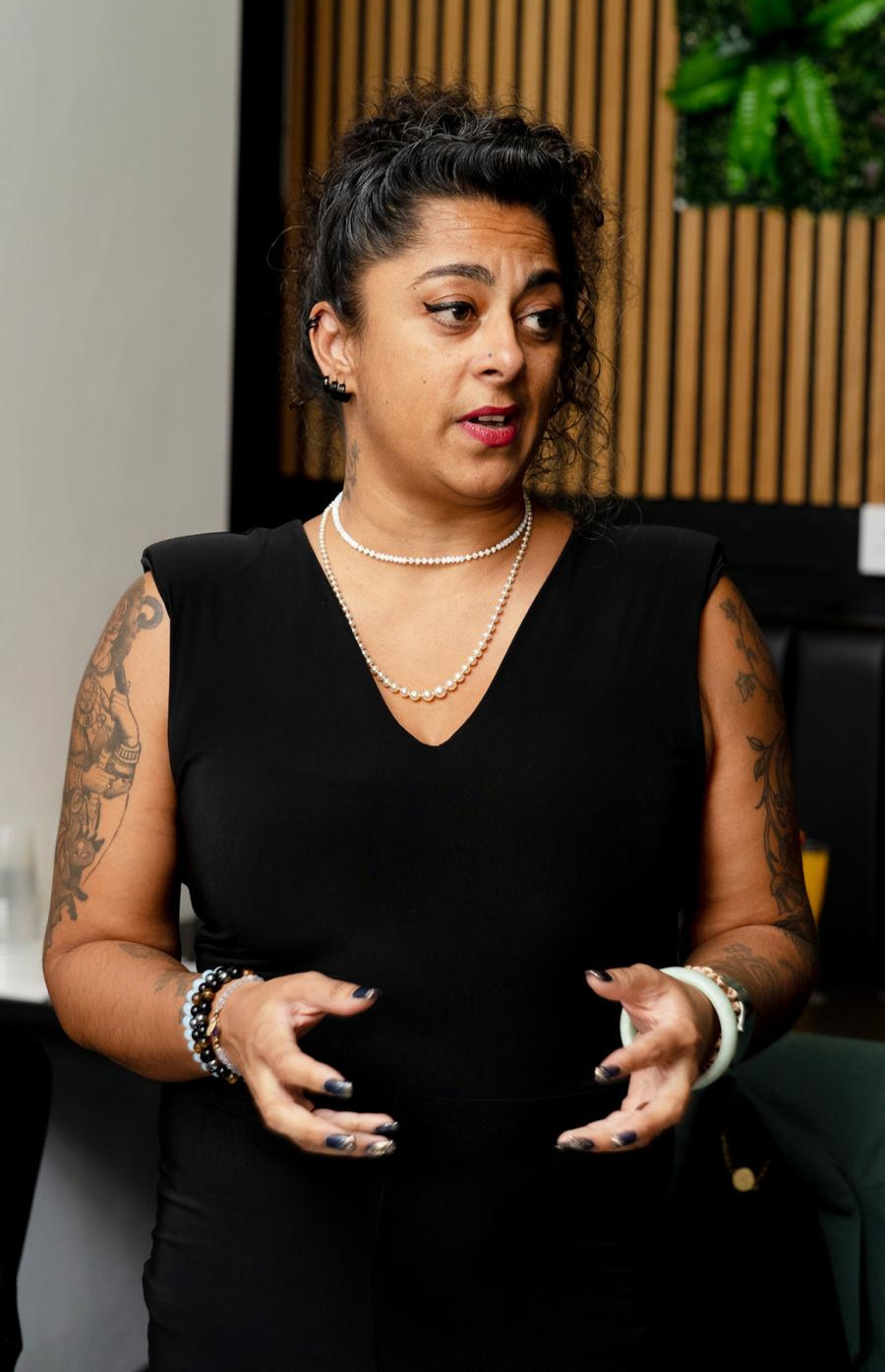
Beyond Visibility: Understanding Contemporary LGBTQ+ Experiences
Inclusion Requires More Than Representation
Over the past three decades, the UK has undergone significant legal and social change for LGBTQ+ people. Equal marriage, protections under the Equality Act 2010, increased visibility in public life, and greater representation across media and politics have transformed the landscape for many people. But between political, legal and policy changes in the UK which have been established without sufficient consultation with the affected communities, LGBTQ+ inclusion is again under pressure.
Improved visibility should not be confused with equality. The reality for many LGBTQ+ people remains characterised by discrimination, exclusion, mental health inequalities, and ongoing barriers to participation. Legal protections only truly exist when human rights can be maintained and safeguarded for historically marginalised populations. While progress has undoubtedly been made, research suggests that many LGBTQ+ individuals continue to navigate societal systems that were not designed with their experiences in mind.
Many LGBTQ+ individuals continue to experience:
Workplace discrimination
Harassment
Mental health inequalities
Barriers to healthcare
Social exclusion
While visible representation has increased, lived experience data continues to show disparities in wellbeing, safety and opportunity. UK Hate crime figures tell a confusing story, while lived experiences give us insight into continued exclusion, discrimination and division. For organisations committed to equity and ethical practice, the focus must move from whether LGBTQ+ inclusion matters to ‘what does equitable LGBTQ+ empowerment actually look like in practice?’.
The UK Is Changing, But So Are LGBTQ+ Experiences
Recent figures from the Office for National Statistics show that an estimated 3.7% of UK adults identified as lesbian, gay or bisexual in 2024, increasing from 2.7% in 2019. Among younger adults aged 16–24, 8% identified as lesbian, gay or bisexual, demonstrating significant generational change.
These figures tell us two important things.
First, more people feel able to describe their identity openly.
Second, organisations can no longer treat LGBTQ+ inclusion as a niche issue affecting only a small minority.
The UK's workplaces, educational institutions, healthcare services and communities are becoming increasingly diverse, requiring leaders and practitioners to understand the realities that LGBTQ+ people continue to face.
Visibility Does Not Guarantee Safety
One of the most persistent misconceptions is that because LGBTQ+ people are more visible, they are automatically safer. Dominant culture narratives misconstrue visible presence for equitable inclusion but research continues to demonstrate otherwise.
New workplace research published by Stonewall in 2025 found:
39% of LGBTQ+ employees still hide their identity at work
36% of employees reported hearing discriminatory comments about LGBTQ+ colleagues
26% of LGBTQ+ staff experienced negative treatment from customers or clients because of their identity
31% would not feel comfortable reporting discrimination if it occurred
These findings are particularly significant because concealment itself carries consequences. Queer scholars such as Professor Elizabeth McDermott have repeatedly highlighted that the emotional labour associated with hiding identity (sometimes referred to as masking) can contribute to poorer wellbeing, social isolation and increased psychological distress. When people feel unable to be authentic, participation becomes conditional rather than equal.
The Difference Between Inclusion and Belonging
Many organisations focus on visibility. Pride campaigns. Rainbow logos and flags. Inclusive branding and aesthetics. Highly visible inclusive events. These actions can be valuable, but they do not necessarily change organisational culture. Representation beyond tokenistic initiatives and shallow PR programmes requires meaningful investment in delivering inclusive systems.
Belonging occurs when individuals feel safe enough to:
Be themselves without fear
Challenge decisions
Raise concerns
Share experiences
Access opportunities equally
Without these conditions, inclusion risks becoming performative. We need to be aware of performative inclusion: initiatives which seem valid but have little representation of LGBTQ+ people in decision-making, are short-term or single events, or initiatives which avoid discussing the challenges faced by LGBTQ+ communities and ways to solve them.
For inclusive initiatives to be impactful, they require empowered and representative leadership that works collaboratively to create opportunities for LGBTQ+ employees and stakeholders to engage and build a sense of belonging, through safe spaces, equal access to resources and career progression opportunities, equitable policies, culture, and treatment.
Understanding Minority Stress
One of the most influential frameworks in LGBTQ+ research is the concept of minority stress. Developed through decades of psychological and social research, minority stress theory suggests that poorer outcomes among LGBTQ+ populations are not caused by identity itself but by the cumulative effects of stigma, discrimination, prejudice and exclusion.
This distinction matters. Being LGBTQ+ is not a risk factor. Experiencing discrimination is.
LGBTQ+ people experience minority stress in multiple ways because they often sit outside of the designated societal norms and are therefore seen as a danger to cohesion. However, the unrealistic, unhealthy and often binary societal constructs of ‘normal’ regarding gender roles, family structures, relationships, identity and expression not only exclude LGBTQ+ individuals and communities. But also establish limited acceptable identities for everyone else to fit into or run the risk of being discriminated against and excluded.
The Mental Health Foundation summarises this evidence clearly, noting that mental health inequalities arise because LGBTQ+ people are more likely to experience social exclusion, rejection, discrimination and hostility.
This aligns with the work of queer authors and researchers including:
Professor Elizabeth McDermott
Professor Ilan Meyer
Dr Meg-John Barker
Professor Surya Monro
whose research consistently demonstrates that social conditions, rather than identity itself, drive many observed inequalities.
Mental Health: A Human Rights and Equity Issue
The evidence regarding LGBTQ+ mental health remains concerning. With young people who identify as LGBTQ+ being targeted online and in person for bullying and abuse, increased pressure is being put on mental health services. The landmark 2024 United Kingdom Survey on the Mental Health of LGBTQ+ Young People, involving more than 9,600 LGBTQ+ young people across the UK, found:
58% had seriously considered suicide within the previous year
19% had attempted suicide
62% reported symptoms of depression
70% reported anxiety
58% reported self-harm
Two-thirds reported experiencing discrimination linked to sexual orientation or gender identity
Importantly, the study found significantly poorer outcomes among trans and non-binary young people. Researchers concluded that affirming environments, trusted adults and inclusive communities were among the strongest protective factors.
This reflects a consistent theme within queer scholarship:
People thrive when they feel safe, recognised and valued
Increase environments where harm is less likely to occur
Recognising that Intersectionality Matters
LGBTQ+ communities are not homogeneous
Experiences differ according to:
Disability
Ethnicity
Socio-economic status
Age
Religion
Geography
Immigration status
Research from Stonewall has repeatedly shown that discrimination is often intensified for LGBTQ+ people who belong to multiple marginalised groups. For example, LGBTQ+ people who are disabled or from racially minoritised communities frequently report additional barriers within workplaces and public services.
This is precisely why intersectionality remains essential. Coined by queer ally and legal scholar Kimberlé Crenshaw, intersectionality helps us understand how multiple forms of inequality can combine and interact. The compounding effect of multiple inequalities does not just add up like one plus one equals two but often multiplies across the various dimensions of a person’s life, creating hundreds of ways society's barriers reduce their access.
A disabled LGBTQ+ person may experience barriers that differ significantly from those experienced by either disabled heterosexual people or non-disabled LGBTQ+ people. Systems, processes and structures exclude them by design. A personal example of this was when some years ago my mum had surgery in the local hospital. In the evening, my mum’s long-term girlfriend (significant other) called the ward to check how things went; they refused to give her any information. When I called, I was also refused any details. I arrived at the hospital the next morning to find out what was going on, to be told by a nurse that my mum’s husband was listed as the next of kin and they can only speak to him. My mum hasn’t been married for more than 2 decades and has no husband. The mystery husband’s contact details were actually my mum’s mobile number, which was switched off in her hospital locker; hence, they couldn’t contact the imaginary man. When we checked the paper forms, mum had completed them correctly but the bias of the person who entered them into the digital system invented a husband who didn’t exist and left a family with no news on a loved one’s surgery for over 24 hours.
Why Intersectionality Matters
Without an intersectional lens, many inequalities remain invisible. Because those making the decisions do not experience discrimination or disadvantage and fail to accommodate the needs of those with differing lived experiences. But no individual experiences life through a single aspect of their identity. Systems, policies and interventions that focus on one characteristic at a time can overlook the ways in which multiple forms of inequality interact and compound one another.
For example, the experiences of a lesbian from the dominant culture, in a professional position may differ significantly from those of a disabled Black lesbian in the same professional role, despite both sharing the same sexual orientation and position. Similarly, a transgender person living in poverty may face barriers that are fundamentally different from those experienced by a transgender person with greater economic security. When organisations rely on broad demographic categories, they often capture only part of the picture, creating solutions that benefit some individuals while unintentionally excluding others.
Intersectionality helps reveal these hidden experiences, enabling practitioners, policymakers and leaders to better understand how overlapping systems of discrimination and disadvantage shape people's lives. By recognising the interconnected nature of identity and inequality, organisations are better equipped to design fairer policies, improve engagement, strengthen safeguarding and create services that respond to the realities of those they aim to support.
In this way, intersectionality is not simply a theoretical concept; it is a practical tool for identifying who is being overlooked, whose voices are missing, and where seemingly neutral systems may be producing unequal outcomes.
The Particular Challenges Facing Trans Communities
Few groups have occupied public debate as prominently in recent years as trans and non-binary people. Yet public discussion often bears little resemblance to lived experience and often excludes meaningful consultation with the impacted communities.
Recent changes in the legal and policy landscape relating to sex and gender have created significant uncertainty for many UK organisations, particularly those responsible for workplaces, public services, education settings and community facilities. Following developments in the interpretation of the Equality Act 2010, alongside evolving guidance and public debate, organisations have sought greater clarity on how to balance the rights, dignity and safety of all service users when providing single-sex and separate-sex facilities such as toilets, changing rooms and accommodation.
While the legal framework continues to protect individuals from discrimination on the grounds of both sex and gender reassignment, many employers and service providers report uncertainty about how these duties should be applied in practice. This has resulted in concerns about legal compliance, safeguarding responsibilities, accessibility, inclusion and the risk of inconsistent implementation. Leaving trans and gender non-conforming individuals vulnerable when accessing public facilities for fear of harassment and bullying. This legislation effectively reduces safe spaces and protections for a small, historically marginalised part of the population, impacting their ability to be actively present and engaged in public life.
Equality and human rights organisations have highlighted the need for clear, evidence-based guidance that enables organisations to navigate complex situations lawfully while maintaining respectful and inclusive environments for everyone affected. The ongoing debate demonstrates that policy compliance alone is insufficient, can fail to protect vulnerable groups and can create more problems than it solves. It also highlights that organisations require robust governance, equality impact assessments, risk management systems, stakeholder engagement and practical decision-making frameworks to implement lawful and proportionate solutions.
Research by Stonewall found:
Two in five trans people experienced a hate crime or incident in a twelve-month period
Many reported hiding their identity due to safety concerns
Significant numbers described barriers to healthcare and lengthy waiting periods for support
Similarly, the 2024 UK LGBTQ+ Youth Survey identified higher rates of discrimination, victimisation and psychological distress among trans and non-binary participants than among other LGBTQ+ respondents. Whether organisations agree with every aspect of public policy debates is beside the point. Ethical practice requires that all individuals are treated with dignity, fairness and respect. Organisations, especially employers, have a duty of care to safeguard their stakeholders, including employees, protecting them from discrimination and exclusionary treatment.
Global Perspectives: Progress and Backlash
Globally, LGBTQ+ rights remain highly uneven. While many countries have expanded protections, others have introduced restrictions affecting LGBTQ+ participation, education, healthcare and freedom of expression.
Stonewall notes that LGBTQ+ movements globally are experiencing significant pressure, particularly relating to trans rights and broader inclusion efforts. This international context matters because public attitudes, political narratives and media discourse increasingly cross borders. What happens globally influences local experiences.
For LGBTQ+ individuals, this can create uncertainty even where formal legal protections exist.
What Ethical Practice Looks Like
Organisations seeking genuinely inclusive practices and culture should focus on:
Psychological safety
Anti-discriminatory practice
Equity-informed policy design
Fair recruitment and progression
Representative Leadership
Accessible complaints mechanisms
Understanding intersectionality
Active allyship
Meaningful engagement with lived experience
Most importantly, inclusion should not depend on individuals educating others about their right to exist. The responsibility belongs to systems.
The most effective organisations work with their stakeholders to understand
"How do people experience our systems?"
The answer often reveals far more than any policy statement.
Practice Reflection
The story of contemporary LGBTQ+ life in the UK is neither one of simple progress nor relentless decline. It is more complex than either narrative suggests.
Many LGBTQ+ people are living more openly than previous generations ever could. Yet discrimination, exclusion and inequality remain deeply embedded within many systems and institutions.
For organisational leaders, policymakers and practitioners, the challenge is not simply to make LGBTQ+ people visible. It is to create environments where visibility is no longer accompanied by risk. Because inclusion is not measured by who appears in the photograph. It is measured by who feels safe enough to stand in it and express their whole self without fear or anxiety.
You can find out more about LGBTQ+ lived experience with Transgender Mythbusting, a mini course founded on discussions about misinformation regarding the trans community with a representative from Q: Alliance.
To assist your inclusive practice, I have shared links to the reading and research used for this article and provided a recommended reading list to help you expand your knowledge on the subject.
References and Research
Stonewall, Research Reports and Rainbow Britain
https://www.stonewall.org.uk/resources/research-reports
Equality and Human Rights Commission
https://www.equalityhumanrights.com/
The Trevor Project, 2024 United Kingdom Survey on the Mental Health of LGBTQ+ Young People
https://www.thetrevorproject.org/survey-international/uk/2024/en/
Office for National Statistics, Sexual Orientation, UK: 2024
Mental Health Foundation, LGBTIQ+ Statistics
https://www.mentalhealth.org.uk/explore-mental-health/statistics/lgbtiq-people-statistics
Elizabeth McDermott, research on LGBTQ+ youth mental health and the Queer Futures programmes
Q: Alliance, a small local charity creating a safe & thriving LGBTQ+ community where everyone is empowered to be their true selves.
Recommended Reading
Being an Ally edited by Shakirah Bourne and Dana Alison Levy
The Queeriodic Table: A Celebration of LGBTQ+ Culture by Harriet Dyer
The Little Book of Queer Icons: The Inspiring True Stories Behind Groundbreaking LGBTQ+ Icons by Samuel Alexander
Allies in Action: A comprehensive guide to LGBTQ+ Allyship by Ariel Sumner
We Have Always Been Here: a queer muslim memoir by Samra Habib
An Introduction to language and Social Justice: What is, what has been and what could be by Netta Avineri and Patricia Baquedano-Lopex