The SMARTER Model
Structured Thinking, Stronger Practice: Introducing the SMARTER Model
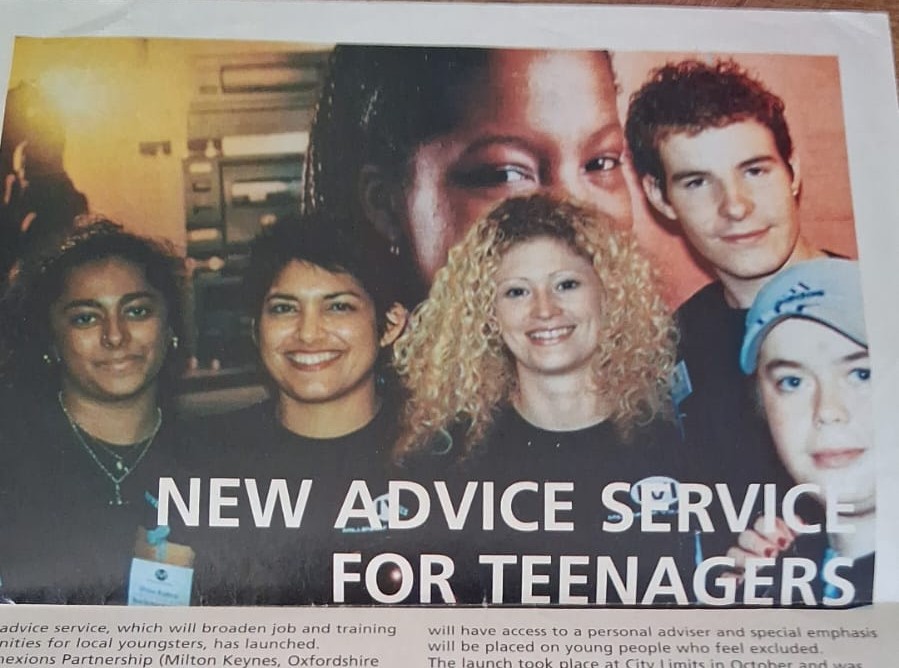
I first started using the SMARTER structured planning model as a trainee youth worker, at a point in my career where I was responsible for delivering work but still developing the confidence to understand how decisions translated into outcomes. At that stage, the SMART framework wasn’t presented as a leadership tool. It was practical guidance, a way of ensuring that what I planned could actually be delivered, evidenced and tracked by my managers.
What became clear very quickly was that having a clear intention was not enough. Without a structured process, plans remained vague, progress was difficult to track and it was almost impossible to demonstrate impact. Using a structured model helped me understand that effective practice depends not just on what you want to achieve, but on how clearly it is defined, how it is measured, and how it is reviewed over time.
This early experience continues to shape how I approach leadership, planning and professional development today.
Planning is often treated as a functional task, something to complete before the “real work” begins. In practice, the quality of planning shapes the quality of everything that follows.
Across sectors, a common challenge is not a lack of ambition. It is a lack of clarity, structure and consistency in how goals are defined, applied and reviewed. This is where structured models such as SMARTER become essential not as theoretical tools, but as practical approaches to improving how decisions are made and implemented.
The SMARTER model sits at the centre of this work.
From SMART to SMARTER: Strengthening the Process
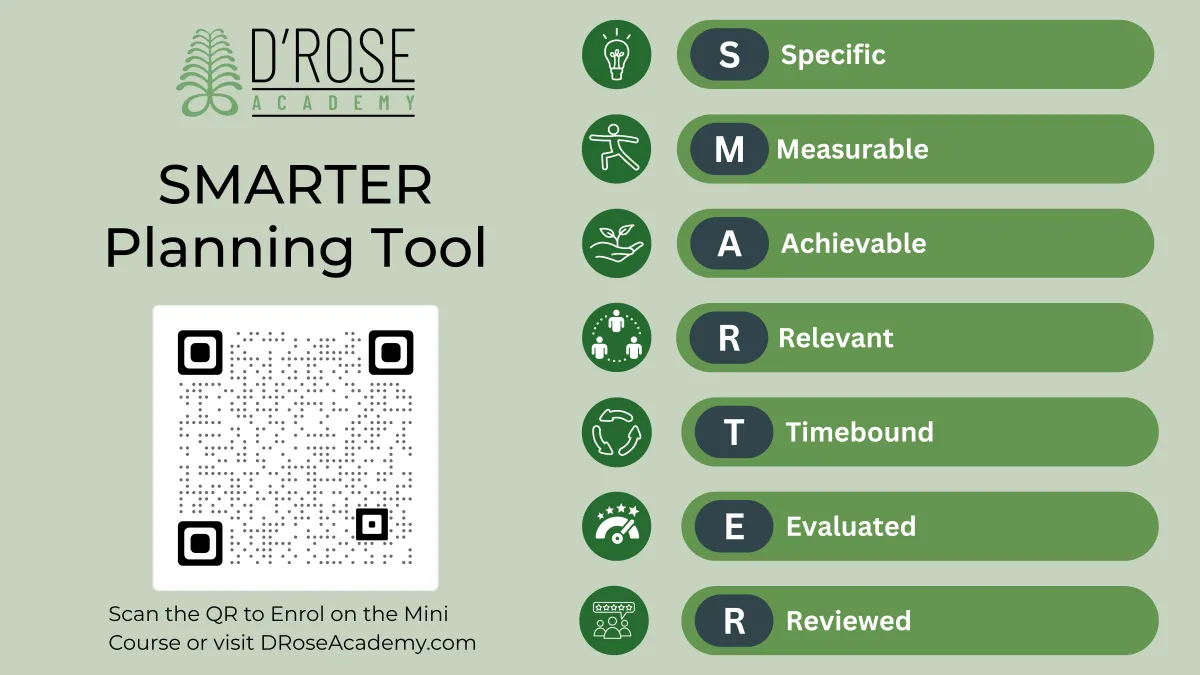
The SMART framework, Specific, Measurable, Achievable, Relevant and Time-bound, has long been recognised as a structured approach to goal-setting, helping organisations move from broad intentions to clearly defined objectives.
However, one of the limitations of traditional goal-setting approaches is that they often stop at delivery. Plans are created, implemented, and then replaced, without a consistent mechanism for learning.
This is where SMARTER becomes more valuable.
By incorporating evaluation and review, SMARTER shifts planning from a static process into a continuous cycle of reflection, learning and improvement. It aligns with wider project management and leadership practice, where structured evaluation and monitoring are essential to improving outcomes, strengthening accountability and informing future decisions.
What is the SMARTER Model?
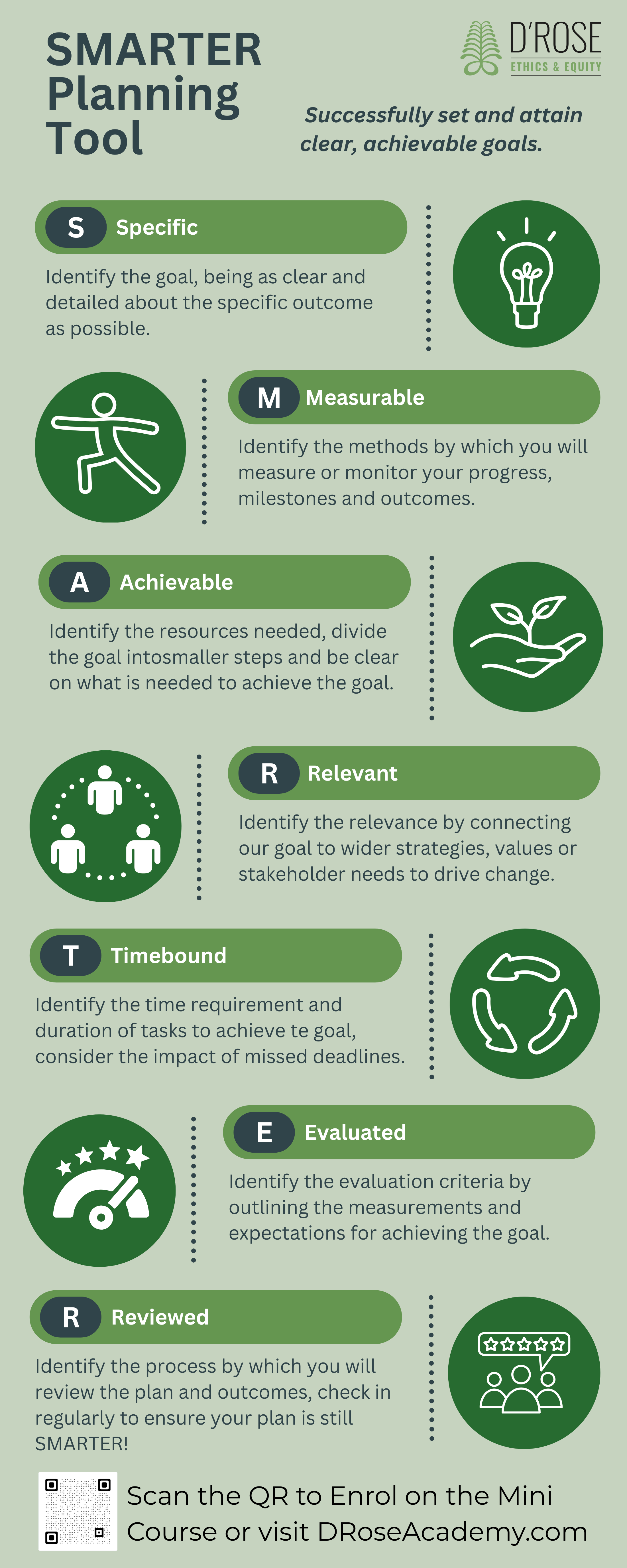
The SMARTER model builds on the widely used SMART framework (Specific, Measurable, Achievable, Relevant, Time-bound) and extends it to include:
Evaluated
Reviewed
This extension is critical. It shifts planning from a fixed process into a continuous cycle of learning and improvement. As outlined in the DRose SMARTER Planning course, evaluation and review ensure that learning is captured and applied, allowing each cycle of planning to inform the next.
Rather than stopping at delivery, SMARTER requires practitioners to ask:
What worked?
What didn’t?
What needs to change?
This creates a feedback loop that strengthens both performance and accountability.
Why Structured Planning Matters in Practice
In many organisations, plans are developed with broad objectives but limited detail on how outcomes will be achieved, measured or sustained. This often results in:
unclear responsibilities
inconsistent delivery
limited evidence of impact
and reduced accountability
The SMARTER model addresses this by breaking planning into clear, structured components.
For example:
Being specific requires more than stating an intention, it involves identifying the detail, context and resources required to achieve it.
Ensuring a goal is measurable means establishing how progress and impact will be tracked and evidenced, not assumed.
Assessing whether a goal is achievable brings realism into planning by considering resources, capacity and wider impacts.
These steps move planning away from aspiration and towards deliverable, accountable outcomes.
Planning as a Leadership Capability, Not Just a Task
One of the key messages within the SMARTER resource is that over time, you should not need to rely on the tool itself. As I explain in the training:
“Eventually you don’t need the tool. You’ll know how to check if something is specific or measurable… it becomes part of your leadership skills.”
This is an important distinction.
The value of structured planning is not in the template, it is in the development of thinking. When applied consistently, models like SMARTER build the ability to:
break down complex goals
identify realistic pathways to delivery
recognise risks and gaps early
and maintain clarity in decision-making
This is particularly important in leadership roles, where decisions often need to be made in complex and evolving or time critical contexts.
Research supports this. Structured planning has been shown to have a positive and measurable impact on team performance, with studies identifying a clear relationship between planning processes and improved outcomes.
An important aspect of the SMARTER model is that it is designed to be accessible and collaborative. Over time, it becomes embedded as part of how individuals or teams think and act. Repeated use of the tool builds habit and strengthens professional capability, meaning individuals begin to apply structured thinking instinctively in their work. We encourage its use in conjunction with our own Equality Impact Assessment tool to ensure actions are planned to be realistic and achievable.
This is where SMARTER moves beyond planning into leadership methodology.
It supports leaders to:
approach decision-making with greater clarity
identify risks and gaps earlier
align actions with purpose and outcomes
and maintain consistency across teams and systems
In practice, this contributes to stronger governance, clearer accountability and more effective delivery.
The Importance of Asking Better Questions
In his 2023 book 'Asking Smarter Questions', Sam Knowels explores the value of curiosity, challenging assumptions and critical analysis through the application of enquiry. A consistent theme throughout the SMARTER model is the use of questions to strengthen and challenge thinking.
In practice, this means moving beyond:
“What do I want to achieve?”
To questions such as:
Why does this matter?
Who is affected?
What resources are actually required?
What impact will this have beyond the immediate outcome?
As highlighted in the training, understanding the “why” is critical:
“The why is one of the most important questions… what is the reason for doing this and what are the long-term benefits?”
This approach encourages more considered, accountable and informed decision-making.
Standardising Practice Across Teams and Organisations
A consistent challenge in organisational environments is variability in how different individuals or teams approach planning. Without a shared structure, this can lead to:
fragmented approaches
misaligned priorities
and inconsistent outcomes
It can also be used to assess the quality of existing plans, enabling leaders to challenge whether proposals are:
clearly defined
measurable
realistic
and relevant to those affected
This supports not only better planning, but stronger governance and decision-making processes.
From Planning to Accountability
A key strength of the SMARTER model is that it creates accountability throughout the process, not just at the end. Evaluation and review are not positioned as optional extras. They are built into the design from the beginning.
As outlined in the SMARTER Planning resource:
“We outline how we’re going to evaluate before we even start the project… so we know what success looks like.”
This reflects recognised best practice in project management, where monitoring and evaluation are essential for:
tracking progress
identifying issues early
and improving future delivery
Without this structure, the same problem and failures are often repeated. With it, learning becomes embedded and improvements become cumulative.
Supporting Ethical and Equitable Practice
Within the DRose context, models such as SMARTER are not just about efficiency. They are about improving the quality and integrity of practice.
Structured planning enables practitioners to:
consider who is affected by decisions
identify where engagement is required
allocate resources more effectively
and ensure outcomes are aligned with wider values and responsibilities
The SMARTER resource highlights the importance of involving stakeholders, understanding impact and aligning goals to wider strategies, all of which are essential to ethical and equitable practice.
Without this level of structure, there is a risk that:
planning excludes key voices
impact is poorly understood
and outcomes do not reflect intended values
A Practical Tool Across Multiple Contexts
One of the strengths of the SMARTER model is its flexibility. It provides a common language and a framework that can be applied across multiple spaces.
It can be applied to:
team objectives
personal and professional development planning
performance management and appraisal processes
project design and delivery
stakeholder engagement projects
organisational strategy and change programmes
It can also be used retrospectively to assess whether existing plans or proposals meet the necessary standards for effective delivery. This makes it a useful tool not only for developing plans, but for challenging and improving them.
Engaging with the SMARTER Workshop
The SMARTER Planning workshop by DRose Academy has been designed to support practitioners to:
understand each component of the model in detail
apply the framework to real-world scenarios
develop structured, practical planning approaches
and build confidence in applying these methods in their own work
The session is not focused on theory alone. It is grounded in application, supporting participants to use the tool in ways that are relevant to their role, responsibilities and context.
Over time, the aim is not reliance on the framework itself, but the development of stronger planning habits and leadership capability.

Reflection
From my early experience as a trainee youth worker to the work I do now, the principle remains the same:
Clear thinking leads to clearer decisions.
Structured planning leads to stronger outcomes.
The SMARTER model provides a practical framework for doing both, supporting not just what we plan to do, but how effectively we deliver, review and improve our practice over time.
The addition of evaluation and review also introduces a critical leadership capability: reflection.
Reflection is widely recognised as a core component of effective leadership, linking experience to learning and enabling individuals to improve decision-making over time. The SMARTER model supports this by making reflection practical and structured, rather than abstract. It encourages practitioners to question and requires that they can evidence the entire process.
Effective planning is not about completing a template. It is about improving how decisions are made, applied and reviewed over time. Ensuring that the outcomes have the desired impact, that resources are managed and that learning is shared.
The SMARTER model provides a structured approach to doing this, supporting good practice through:
clarity
consistency
accountability
and continuous improvement
In increasingly complex environments, these are not optional elements of practice. They are essential.
To complete the DRose Academy SMARTER Planning course with a fully downloadable PDF resource, register here.